Garage Door Lead Generation: Proven Strategies to Get More Local Leads
Most garage door companies struggle more with lead ownership than with marketing itself. Effective lead generation means attracting, capturing, and converting homeowners who need repair, installation, or maintenance through channels you control. This reduces reliance on third-party leads that force you to compete for the same customers. When managed well, this approach provides a steady stream of exclusive, high-intent calls and helps keep your schedule balanced.
This guide highlights the most effective channels for garage door companies in 2026, including Local Services Ads, Google Ads, content, referrals, and other often-overlooked options. It also explains how to measure each channel’s effectiveness.
Table of Contents
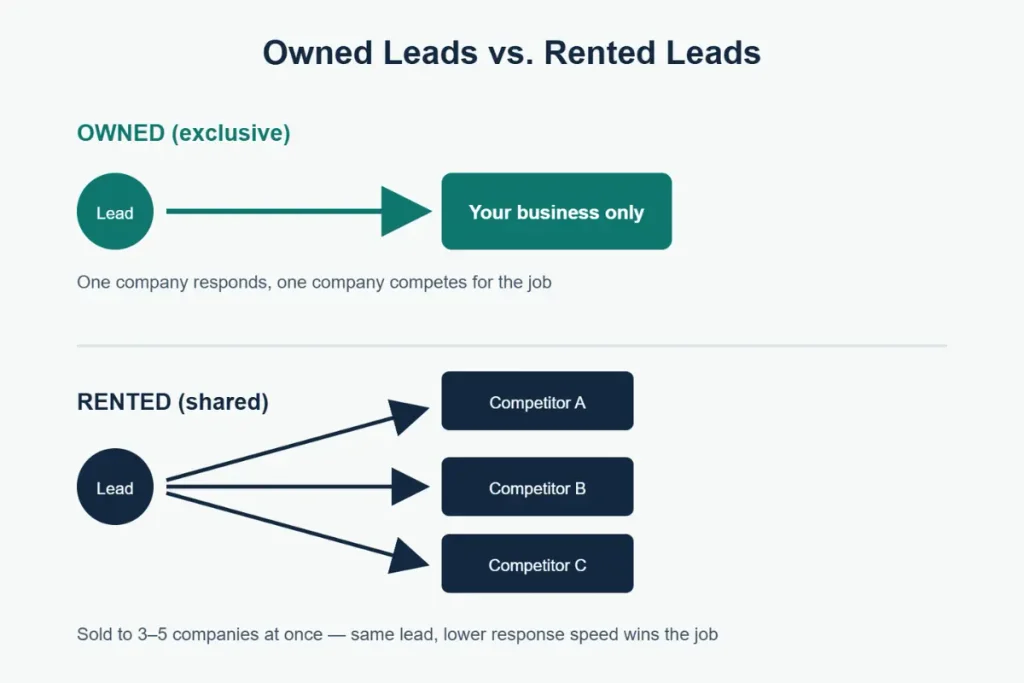
Owning Leads vs. Renting Them
Marketplace leads are sold to several companies, so you must compete for each opportunity right away. In contrast, leads from your website, Local Services Ads, or advertising are exclusive, enabling faster responses and much higher conversion rates.
Homeowners now research providers before making contact. They review Google Maps ratings, compare local options, and often check pricing. A high-quality lead is local, shows clear buying intent, and comes through a channel where you aren’t competing with multiple companies for the same inquiry.
Before You Spend on Ads
Define your service area by ZIP codes or drive-time radius, not city names, so your ad campaigns and profile settings accurately reflect your coverage. Identify your most profitable services, such as spring repair, opener installation, and full door replacement, and allocate more budget to these offerings.
At the outset, distinguish between emergency and planned-purchase intent. Emergencies, such as a broken spring or a door that will not close, require immediate service. In contrast, door upgrades involve longer decision cycles and more comparison shopping. Use call tracking numbers, UTM-tagged links, and a CRM lead-source field from the beginning to ensure all spending is traceable to specific results.
Maintain an accurate Google Business Profile and strong local search visibility, as most garage door searches begin there. Our local SEO guide for garage door companies provides comprehensive strategies, including building a review-request system and improving map pack rankings.
Make Your Website Ready to Capture Leads
Unconverted traffic results in wasted spend. The following factors are particularly important:
- Phone number and a “Same-Day Service” message visible above the fold
- Mobile-first design, since most garage door searches happen on a phone
- Click-to-call buttons that actually initiate a call, not just display a number
- Short contact forms (name, phone, brief problem description), since every extra field costs completions
- Fast page speed, since slow-loading pages lose mobile visitors before they convert
Creating separate pages for each service, such as repair, spring replacement, and opener installation, is more effective than using a single generic services page. This strategy enables you to showcase licensing, review counts, and before-and-after photos specific to each service.
Google Local Services Ads (LSAs)
LSAs offer an effective way to promote emergency garage door services. They appear above traditional ads with a “Google Guaranteed” badge, and you pay per lead, not per click. To qualify, you must pass a background check and provide proof of insurance and a valid license.
Once approved, complete all service categories, business hours, and photo fields in your LSA profile, as incomplete profiles rank lower. Respond promptly to new leads, since response time directly affects your ranking. Start with a modest daily budget and increase it once your cost per lead stabilizes. If you receive an invalid lead, such as one outside your service area, spam, or a no-show, use Google’s dispute process to request a credit rather than absorbing the cost.
Generate Immediate Leads With Google Ads
LSAs rely on automation, while Google Search Ads offer more control. Set up separate campaigns for emergency repairs, installations, and replacements, as each requires unique messaging and targets specific search intents. Build a thorough negative keyword list to exclude DIY researchers and job seekers.
Ad copy that highlights speed, trust signals such as licensing, insurance, and years in business, and a clear call to action consistently outperforms generic messaging—direct users to a landing page tailored to the specific service, not your homepage. Allocate your budget according to market size; small towns may require only a few hundred dollars per month, while competitive metropolitan areas may need several thousand.
Content That Builds Long-Term Lead Flow
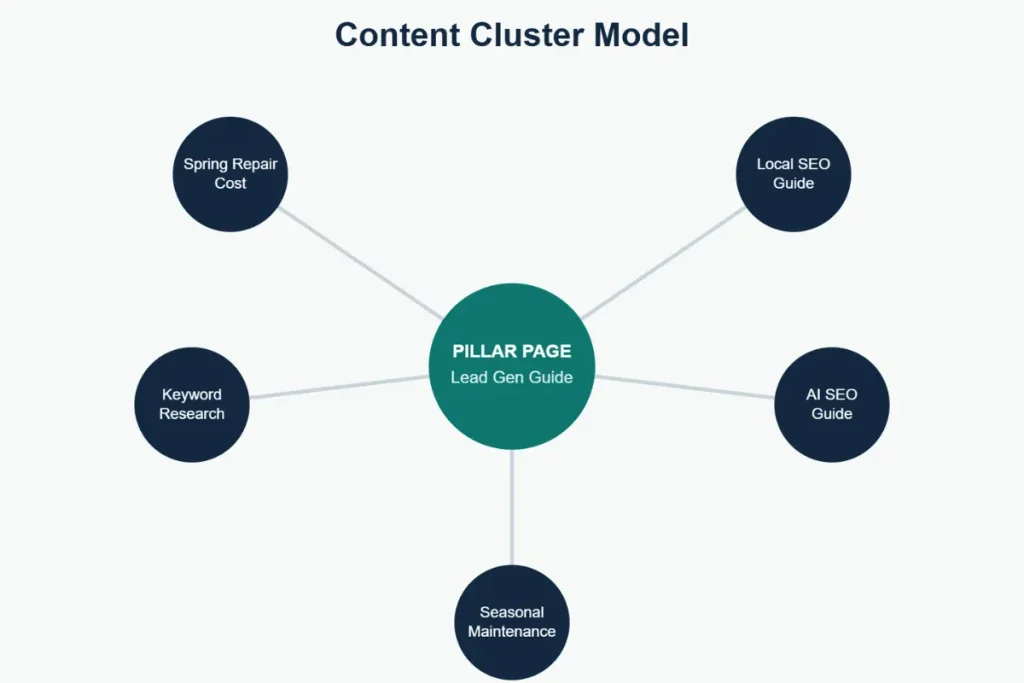
Unlike ads, content keeps generating leads after promotion ends. Service pages targeting buying intent, such as “garage door spring replacement cost,” attract homeowners ready to hire. Educational posts on maintenance, troubleshooting, and pricing engage early-stage searchers and gradually establish topical authority.
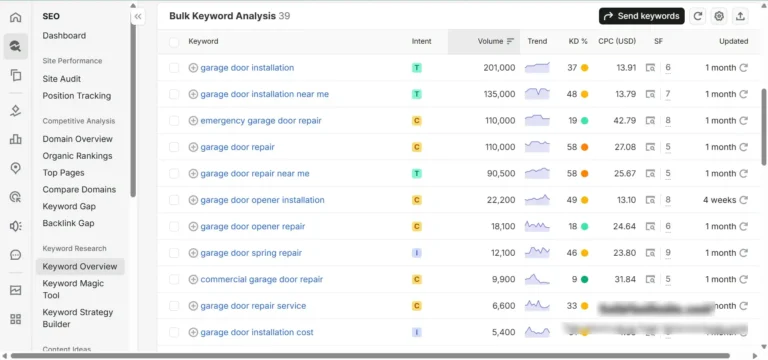
Seasonal content, such as winter maintenance or storm-damage preparation, targets predictable search spikes. Short before-and-after or repair-explainer videos build trust and perform well on YouTube and social platforms. Grouping related articles into clusters around a central pillar page is the most effective way to signal topical authority to Google and AI search engines. For a complete keyword-to-page mapping, including over 220 terms by search intent, see our garage door keyword research.
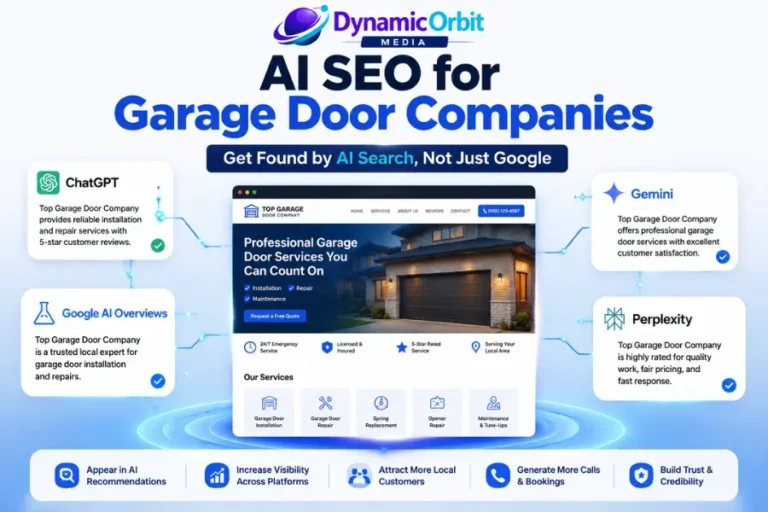
Homeowners now often receive quick answers about garage door pricing and providers directly from AI tools before visiting a website. The same content and profile fundamentals that support local SEO also influence whether these answers recommend your business. For details on required schema and content structure, see our guide to AI SEO for garage door companies.
Additional Lead Channels Worth Testing
- Facebook Lead Ads work well for planned purchases like door replacements or upgrades, using in-platform forms that reduce drop-off.
- Retargeting re-engages website visitors who didn’t convert the first time.
- Email marketing nurtures past customers with maintenance reminders and referral asks.
- Referral programs and strategic partnerships with realtors, home inspectors, or HVAC companies generate warm, cost-effective leads.
- Community sponsorships and offline marketing (truck wraps, yard signs, local event presence) build the brand recognition that makes every digital channel work harder.
Exclusive Leads vs. Shared Leads
Exclusive leads are provided only to your company, while shared leads are distributed to three to five competitors at once. Shared leads may seem less expensive at first, but their lower conversion rates often lead to similar or higher acquisition costs. For most garage door companies with an effective sales process, exclusive leads usually deliver a better return. However, shared leads can help increase volume during slower periods.
Measuring What Actually Works
Track cost per lead (CPL) and cost per acquisition (CPA) by channel, not just in aggregate. The close rate reflects your team’s effectiveness in converting calls to booked jobs. Compare customer acquisition cost to average job value to assess channel profitability, and prioritize return on ad spend and lifetime value over total lead volume. Higher-value leads typically deliver better results than more low-quality leads, especially when factoring in repeat business and referrals.
Call tracking and CRM integration are essential for accurate measurement. Without them, identifying each job’s source is challenging.
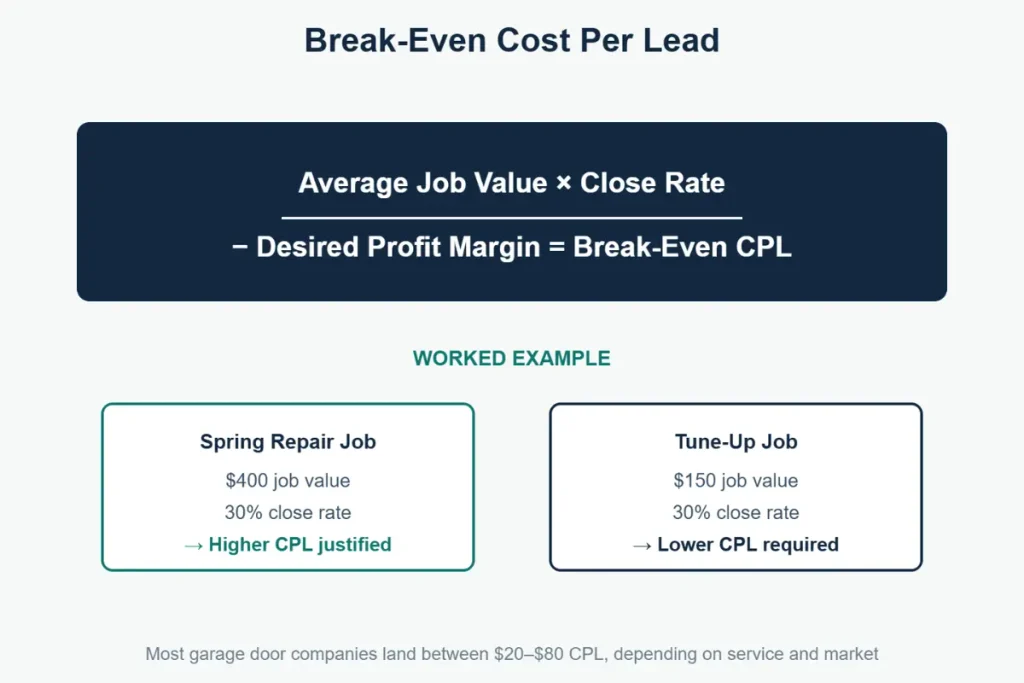
Break-even CPL formula: (Average Job Value × Close Rate) − Desired Profit Margin
Most garage door companies target a CPL between $20 and $80, depending on service type and market. With a 30% close rate, a $400 spring repair can support a higher CPL than a $150 tune-up.
Budget by Market Size
| Plan | Monthly Range | What It Covers |
|---|---|---|
| Starter | 1,000-3,000 | GBP optimization, review generation, modest LSA budget |
| Growth | 3,000-10,000 | Adds Google Ads, a content calendar, location page expansion |
| Market Leader | $10,000+ | Multi-location SEO, retargeting, expanded content, dedicated reputation management |
Small-town operators often see strong results with modest, consistent spending due to lower keyword competition and effective GBP optimization. In metro markets, ongoing investment in SEO, LSAs, and paid ads is necessary to compete for high-volume terms against established competitors.
Common Lead Generation Mistakes
- Buying low-quality shared leads without tracking actual ROI
- Neglecting the Google Business Profile while spending on ads
- Sending paid traffic to a weak landing page instead of a matched one
- Not tracking call sources, so you can’t tell which channel is working
- Slow or inconsistent follow-up on new leads
- Spending only on ads while ignoring the SEO and content that compound over time
Choosing a Lead Generation Partner
Before entering an agreement, ask about the percentage of exclusive leads, how ROI is tracked and reported, and the provider’s experience in home services. Confirm that Google Business Profile management, website conversion optimization, LSA and Google Ads management, and content or SEO services are standard. Watch for vague reporting, long contracts without performance guarantees, and pricing based only on ad spend without accountability for lead quality. Request references and specific metrics on booked jobs, not just clicks.
Conclusion
Garage door lead generation works best as a comprehensive system, not a single tactic. Local SEO and Google Business Profile provide sustained, cost-effective visibility, while LSAs and Google Ads deliver immediate leads. Content and referrals gradually build momentum and strengthen your presence on AI-driven platforms. Companies that diversify channels, track performance by source, and prioritize exclusive leads consistently outperform those relying on a single rented-lead source.