Garage Door Map Pack Spam: Why Fake Listings Keep Outranking Real Companies
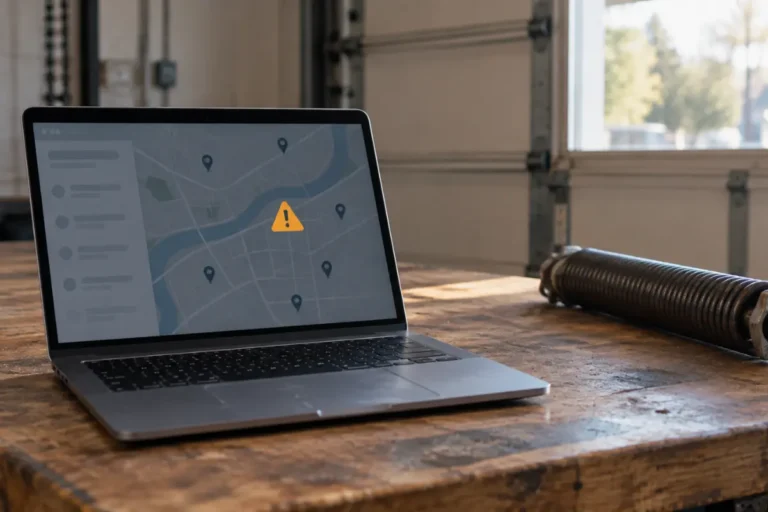
If you operate a licensed garage door company and have searched your service area on Google Maps, you have likely noticed that several top map pack results are not legitimate businesses. Many are virtual addresses, call centers, or lead brokers posing as local shops, yet they outrank you for searches that once brought your best jobs.
This issue, known as garage door map pack spam, remains a persistent challenge in local SEO for the industry. It has been documented by industry press, highlighted by Google’s search liaison, and reported by thousands of business owners, yet it persists. This guide outlines how the spam operates, its impact on legitimate businesses, how to identify fake listings, and steps you can take to report them and strengthen your own rankings.
Table of Contents
What Is Garage Door Map Pack Spam?
Garage door map pack spam involves creating fake or ineligible business listings, virtual addresses, duplicate profiles, or misrepresented locations on Google Maps to dominate the top three local results for garage door searches. Rather than competing on service quality or proximity, these operators create the illusion of being the closest and most established provider in many cities simultaneously.
The garage door and locksmith industries are among the most affected by this issue on Google Maps. In 2020, Google’s public search liaison recognized the problem after a local SEO expert revealed that only a small fraction of garage door listings were legitimate businesses. Years later, forum threads and community reports continue to uncover networks of hundreds or even thousands of fake garage door listings, indicating that this remains an ongoing challenge.
How Fake Listings Get Into the Map Pack
Spam operators rely on a few repeatable tactics. Once you know the signs, these schemes become easier to identify.
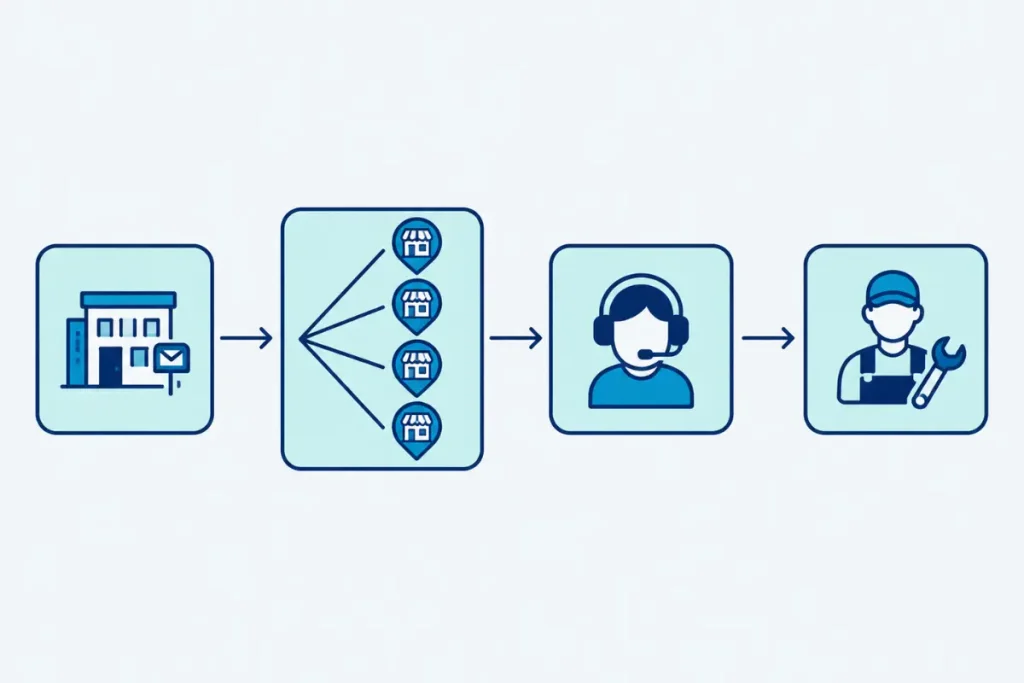
Virtual and unstaffed addresses. Rather than using a legitimate storefront, spam networks register listings at mailboxes, co-working spaces, shared office suites, or locations without an actual garage door business. One operator can claim dozens of these addresses across a metro area in a single afternoon.
Some business names are excessively keyword-stuffed. For example, a listing titled “24 Hour Emergency Garage Door Repair Same Day” does not accurately describe the business and instead attempts to rank for multiple search terms. While Google’s guidelines prohibit this practice, enforcement has not kept pace with the rapid creation of new listings.
Manufactured review velocity. Genuine businesses receive reviews gradually as they complete jobs. In contrast, spam listings often accumulate dozens of five-star reviews in a short period, sometimes from reviewers who rate businesses in other cities. This rapid review growth is a strong signal in Google’s ranking algorithm, which spammers exploit.
Bulk lead-generation networks. The most sophisticated operators are not local businesses. Instead, call centers manage hundreds of listings across multiple states, all routed to the same phone number or dispatch team. When a customer calls, the lead is sold to the highest-paying subcontractor, often without any quality or licensing checks.
Why Spam Networks Slip Past the Same Scrutiny That Catches Real Companies
Google subjects garage door listings to heightened scrutiny, requiring business owners to undergo rigorous reviews for every profile edit, category change, or address update. However, this increased oversight often fails to detect the fake listings it is intended to prevent. For example, a legitimate company making multiple changes in one session may trigger an automated flag. At the same time, a spam network can register numerous listings across various accounts and avoid detection by dispersing its activity.
This issue largely stems from scale. Google’s spam detection systems are designed to identify patterns. Still, a coordinated network that varies addresses, phone numbers, and business names across cities can appear as many independent businesses rather than a single operator. At the same time, a legitimate company making a minor correction, such as fixing a typo in business hours, may face manual review meant for more serious violations. If your profile has been suspended or flagged while a competitor’s fake listing remains active, you have experienced this imbalance. We address this issue, including steps to reinstate a wrongly suspended profile, in our guide on why garage door Google Business Profiles get suspended.
What Map Pack Spam Actually Costs Real Garage Door Companies
The impact is tangible and appears in three specific ways.
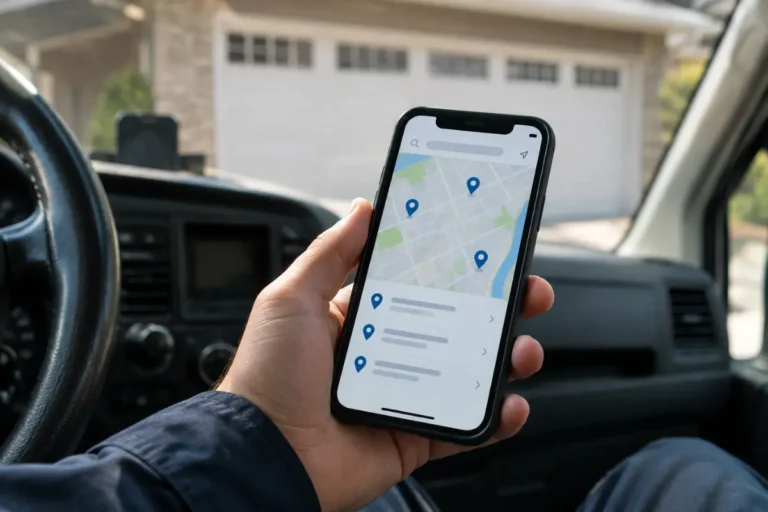
Loss of urgent job opportunities. Most garage door searches are time-sensitive, such as when a spring breaks, a door will not close, or a remote fails. Customers typically select from the top map pack results. Each fake listing in these positions diverts legitimate jobs to lead brokers rather than qualified, licensed companies.
Reputational risk by association. When a lead-generation network sends an unvetted subcontractor who performs substandard or overpriced work under a name resembling a local business, customers often associate the negative experience with all garage door companies. This undermines trust in the entire local market, including your business.
Unfair competition in reviews. Legitimate companies earn reviews gradually through customer satisfaction. Competing with listings that rapidly accumulate large numbers of reviews creates an uneven playing field. It turns a genuine quality indicator into a numbers game that rewards rule-breakers.
If your lead volume has been inconsistent for reasons beyond spam, consider diversifying your marketing channels instead of relying solely on the map pack for calls. Our guide to garage door lead generation explains how to build a pipeline that doesn’t depend on map pack visibility.
How to Spot a Fake Garage Door Listing

Before reporting a listing, please verify its details. Watch for these common red flags:
- No visible signage or storefront at the listed address, or the address is for a UPS Store, co-working space, or unrelated business.
- A business name that uses excessive keywords instead of a legitimate company name.
- Dozens of five-star reviews posted within a short period, especially if reviewers have also reviewed businesses in distant cities.
- Identical phone numbers or similar business descriptions appearing in listings across multiple cities.
- A profile marked as “always open” or offering 24/7 emergency service without other verifiable business details.
- No consistent website, or a website listing many “locations” that all direct to the same contact form.
While none of these signs alone confirm a fake listing, two or more together are a strong indicator.
How to Report Garage Door Map Pack Spam
Reporting spam will not resolve issues immediately, but consistent, well-documented reports are the most effective tool for legitimate businesses and yield results over time.
- Open the specific listing on Google Maps by searching the business name directly. Avoid using saved screenshots, as listings may change.
- Use “Suggest an edit” and choose the option that best matches your report, such as permanently closed, not at this location, or duplicate listing.
- Document evidence before submitting your report. Save the Maps URL, note any address discrepancies or duplicate patterns, and capture screenshots that support your claim, such as a satellite view without a storefront.
- Submit a redressal request for larger or repeated spam networks. If multiple listings appear to be operated by the same entity, provide Google’s Business Profile support with a detailed report and a list of affected listing links.
- Track your submissions by recording the date and listing for each report. If spam reappears under a new name at the same address, your previous records can support follow-up actions.
Reporting spam is separate from defending your own profile and will not put your listing at risk, unlike a competitor’s complaint. If you also wish to improve your map pack ranking while addressing spam, our guide to Local SEO for garage door companies outlines key ranking factors to prioritize.

Building Rankings That Spam Can’t Easily Take
Reporting spam can reduce competition, but strengthening your own listing is a more effective long-term strategy.
- Ensure your business has a verified, staffed location, and keep your address, business name, and category information consistent across your website, Google Business Profile, and all directories.
- Encourage satisfied customers to leave reviews promptly after each service to build a steady and authentic review history.
- Regularly update photos of your storefront, vehicles, and technicians at work, as authentic, recent images help distinguish your business from fake listings.
- Accurately define your service area and avoid listing locations you do not serve, as misrepresenting coverage is a common spam tactic.
- Respond to reviews regularly, as active engagement signals trustworthiness and spam operators often neglect it.
While these strategies will not eliminate spam, together they demonstrate to customers and Google’s ranking systems that your business is legitimate and established.
Frequently Asked Questions
Looking to increase your local leads from Google?
Reporting map pack spam is only part of the solution. To achieve long-term success, your own listing must be competitive. Dynamic Orbit Media partners with garage door companies to strengthen ranking signals that spam listings cannot replicate, including verified locations, consistent review growth, and a strong local SEO foundation that remains effective even as new spam listings appear.