Garage door seo
Garage Door SEO: Get More Organic Traffic, Calls, and Booked Jobs
Most garage door jobs start with a phone call. When a spring breaks or someone needs a new door, they search Google. If your business isn’t showing up, those calls go to the shop down the street.
We solve this problem every day for garage door companies. Our team handles the SEO, local SEO, and Google Business Profile work that gets your business in front of homeowners when they need you. Here’s what garage door SEO actually is, why it matters, and the steps that bring in booked jobs. I’ll also show you where we usually step in to take the work off your plate.
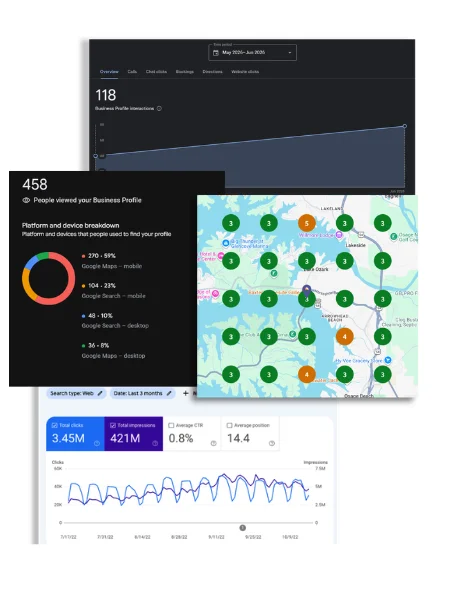
Proven SEO results for garage door companies
Every screenshot above comes from a real campaign. These are the measurable outcomes our garage door clients see when local search is done right — more rankings, more visibility, more calls from people ready to book.

What Is Garage Door SEO?
Garage door SEO is the local search work that gets your website, Google Business Profile, and content in front of people searching for garage door repair or installation in your city. It covers local SEO, on-page work, technical fixes, and service-based content, so the right page shows up for the right search.
Most garage door owners would rather run their business than manage citations, schema, or content calendars. That’s where we come in. We handle the system, so your SEO work leads to more calls and booked jobs.
How Garage Door SEO Works
Google looks at three things: relevance, proximity, and trust. For garage door companies, that means answering real questions, having an address in the search area, and building solid reviews. Good content, accurate listings, and links from trusted sites help turn that work into more visibility and calls.
Why Garage Door SEO Is Different From Traditional SEO
Garage door SEO is local and service-focused. Most people searching for help want a phone number, not a long article. You need a strong Google Business Profile, clear service area pages, and fast-loading service pages. Broad blog content matters less. That’s why our strategy starts with local SEO and GBP optimization, then content.
SEO vs PPC vs Google Local Services Ads
SEO, pay-per-click, and Google Local Services Ads all show up on the same search page, but each works differently. PPC gets you seen right away, but leads stop when your budget does. LSAs charge per lead and require Google Guarantee approval. SEO takes longer but brings in leads at a lower cost over time and keeps working even if you pause ads. Most companies get the best results by using all three. We can help you figure out how to split your budget for your market.
Why SEO Matters for Garage Door Companies
Increase Local Visibility
Most people search for a garage door company by typing their city or ‘near me.’ If your business shows up in the map pack and organic results, you get seen by people who are ready to book. These are not just ad clicks. They’re real leads.
Generate Qualified Phone Calls
People searching for garage door help usually have a real problem to solve. Broken springs, damaged panels, or a new opener. That intent leads to better calls than most ads.
Book More Repair & Installation Jobs
If your website and Google Business Profile make it easy to call or schedule, more visibility and better calls turn into more booked jobs. It takes work to set up, but it pays off. This is the work we do every day.
Build Long-Term Lead Generation
Ads stop the moment you pause your budget. SEO, once it starts working, keeps bringing in leads month after month. It takes time to get there, but the results last. Most of our garage door clients stay with us well past their first year for this reason.
Lower Customer Acquisition Costs
You don’t pay for every click with SEO. Over time, your cost to get a new customer drops. You do have to put in more work and planning up front. This is usually the number our clients care about most, and it’s the one we track hardest.
If you want to see what this looks like for your business, let’s look at your market, your competition, and your goals together. Dynamic Orbit Media builds custom SEO roadmaps for garage door companies
The Five Pillars of Garage Door SEO
Local SEO
Local SEO starts with the basics: a complete Google Business Profile, accurate citations, real reviews, and content that matches what people in your area actually search for. If you want to show up in the map pack or for ‘near me’ searches, this is where you begin. We start every garage door project here.

2
On-Page SEO
On-page SEO is about making sure every page has clear titles, headings, and content. Internal links help both Google and your clients find what they need. Each page should make its purpose obvious.
3
Technical SEO
Technical SEO is the foundation of every successful campaign. We optimize your site’s speed, mobile usability, security, and crawlability to ensure Google can efficiently index and rank your content.
4
Off-Page SEO
Off-page SEO is about earning trust. That means getting backlinks from real sites, building local partnerships, and showing up in places where people talk about your business. Google pays attention to these signals.
4
User Experience & Conversion Optimization
Ranking is only half the job. We optimize your website with clear calls-to-action, fast performance, and a seamless user experience to convert more visitors into calls, leads, and jobs.
Local SEO Strategy for Garage Door Companies
Most garage door companies miss out on local search. We spend most of our time here because this is where the biggest gains are.
Google Business Profile Optimization
Your Google Business Profile is your main tool for local SEO. Keep your hours accurate, list your services in detail, and set your categories. Update it often.
Business Categories & Services
Set your main category to ‘Garage Door Supplier’ or ‘Garage Door Repair Service.’ Add secondary categories that match your work. List every service you actually offer in the services section. Specifics help.
Products, Photos & Videos
Post clear photos of your installs, repairs, and your team. Show real jobs. Use the product feature for door models or opener brands you actually install.
Google Posts
Share updates about promotions, maintenance tips, or recent jobs. This keeps your profile active and gives people a reason to look at your business.
Reviews Generation System
Ask for a review after every job. Use text, email, or leave a QR code with the customer. This is one of the strongest signals for Google and future customers. We set up this system so it runs automatically after each job. No one on your team has to remember to send it.
Review Response Strategy
Reply to every review. Respond quickly and keep it professional. Both Google and your customers notice when you engage.
Citation Building
Citations are mentions of your business name, address, and phone number on sites like Yelp, Angi, and the BBB. Keep these details accurate and consistent everywhere. This helps your local rankings.
NAP Consistency
Small mistakes in your address or phone number confuse Google. Make sure your NAP matches exactly everywhere you list it.
Service Area Optimization
If you work from home and want privacy, set your GBP as a service-area business. This lets you show your coverage area without listing your address.
Local Directory Listings
List your business on home service directories like HomeAdvisor, Angi, and Thumbtack. These sites send extra traffic and build trust.
Local Map Pack Ranking Factors
Google looks at proximity, relevance, and prominence for the map pack. You have the most control over prominence. Build it with reviews, citations, and backlinks over time.
Google Business Profile is the fastest lever most garage door companies can pull. Dynamic Orbit Media’s GBP optimization service covers every item above — categories, posts, reviews, citations, and ongoing management — so your profile is always working for you, not sitting stale.
Keyword Research for Garage Door SEO
Understanding Search Intent
Garage door keywords usually fall into three groups: commercial, informational, or navigational. If you want your content to rank and bring in leads, match it to the right intent.
Commercial Keywords
When someone searches for “garage door installation” or “garage door repair cost,” they are ready to hire. These belong on your main service pages. The page should answer exactly what they searched for.
Local Keywords
City and neighborhood keywords like “garage door repair Plano TX” are for your service area pages. Only create pages for places you actually serve. Google can tell if you fake it.
Emergency Service Keywords
If someone searches “garage door stuck open emergency” or “same day garage door repair,” they need help right now. Give them a dedicated emergency page and make it easy to call or book.
Informational Keywords
Questions like “how long do garage door springs last” come from homeowners still researching. Use these for blog posts that build trust. This is a long game, but it pays off.
Seasonal Keywords
Weather-related searches like “garage door won’t open after storm” or “winterize garage door” spike at the same times every year. Plan your seasonal content so you are ready when demand comes.
Competitor Keyword Gap Analysis
Check which keywords your competitors rank for that you don’t. These gaps tell you where to add new content or service pages. This is one of the first reports we run for new garage door clients, so you see exactly where you’re behind before we start fixing it.
Keyword Cannibalization Prevention
If you target the same keyword on more than one page, Google gets confused, and your rankings drop. Give each page one main keyword and a clear goal.
Build High-Ranking Service Pages
Garage Door Repair Pages
Most repair pages get lost under installation content. That means fewer calls. List the top repair problems you handle, show your process in plain steps, and make it clear what to do next. Keep repairs and installs on separate pages.
Garage Door Installation Pages
If you install doors, list the types and materials you work with. Walk through what happens from the first quote to the last walkthrough. Most homeowners want to know what to expect before they pick up the phone.
Garage Door Opener Pages
Most companies ignore opener pages. Target searches by brand and features like smart openers or battery backups. Few competitors do this, so you can pick up calls they miss.
Maintenance Pages
Maintenance pages bring in homeowners who want to avoid major repairs. List exactly what your service covers and show how a plan saves money over time.
Emergency Service Pages
Emergency pages should load fast and put your phone number at the top. Skip the intro. Get straight to the problem and how soon you can help.
Commercial Garage Door Pages
Commercial clients search differently than homeowners. They look for rolling steel doors, loading dock equipment, or compliance info. Write this page for that audience.
How to Build Service Area Pages That Actually WorkS
Each location page should open with a short intro, list only the services you actually provide at that site, and mention real neighborhoods or landmarks nearby. Templates with city names swapped in won’t cut it. Google can spot those a mile away.
Localization Checklist
Call out the neighborhoods you cover, the weather issues that affect your patients, and your real response times. If you have local partners or actual cases from that area, add those details.
Local Proof Elements
Use reviews from clients in that area, photos from real cases, and a map of your service zone. These are the details that prove you actually work there.

Avoiding Duplicate Content
If your pages only differ by city name, Google will bury them. Real local details and unique content are what keep your pages visible.
Internal Linking Between Locations
Link your location pages to each other and to your main service pages. This helps Google understand your actual reach.
On-Page SEO Blueprint
SEO Titles
Include your primary keyword and city in the title. Keep titles under 60 characters and prioritize phrases that match common search queries.
Meta Descriptions
A strong meta description summarizes the page’s value and includes a call to action. While not a direct ranking factor, it greatly affects click-through rates.
URL Structure
Use URLs such as /garage-door-repair/austin-tx/ rather than long strings of numbers or symbols. Clear URLs are easier for both Google and clients to understand.
Heading Hierarchy
Use a single H1 per page. Organize content with H2 and H3 headings to make topics easy to scan for both Google and your clients.
Content Optimization
Begin by addressing the primary question at the top of the page, followed by supporting details and examples. This approach helps both homeowners and search engines identify key information.
Image Optimization
Compress images and use descriptive file names and alt text, such as “garage-door-spring-repair.jpg.” This improves site speed and supports image search optimization.
Internal Linking Strategy
Link your repair page to your installation page, and ensure both connect to your main contact page. Internal links help Google understand your services and guide clients to take action.
External Linking
Reference trusted sources, such as manufacturer specifications or safety standards, when appropriate. This builds credibility with both Google and your clients.
Technical SEO Checklist
Core Web Vitals
Core Web Vitals measure site loading speed, responsiveness, and visual stability. Low scores can reduce your search rankings, even if your content is accurate.
Mobile Optimization
Because most garage door searches occur on mobile devices, a fully responsive design with accessible call buttons is essential.
Page Speed Improvements
Compress images, remove unnecessary scripts, and use a reliable host. These steps improve load times, which benefits both your Google rankings and client conversions.
HTTPS & Website Security
An SSL certificate is a basic trust and ranking requirement. Sites without HTTPS are flagged as “not secure” in most browsers.
XML Sitemap
A clear and updated XML sitemap enables search engines to efficiently discover and index all important pages.
Robots.txt
Configure your robots.txt file to ensure search engines crawl relevant pages and exclude those that are not important.
Crawlability
Maintain a straightforward site structure. Clear navigation allows search engines to access every page efficiently.
Indexability
Check for unintended “noindex” tags or blocked files, as these issues can prevent your pages from appearing in search results.
Canonical Tags
Use canonical tags to indicate the primary version of each page. This prevents duplicate content issues, particularly when similar pages exist for different locations.
Broken Links & Redirects
Identify and fix broken links, and implement 301 redirects when moving or removing pages. This sustains site usability and preserves search rankings.
Most garage door owners are unaware of the technical aspects of their site until it affects their rankings. Dynamic Orbit Media conducts a comprehensive technical audit with every SEO engagement to ensure all items on this list are addressed.
Schema Markup for Garage Door Websites
LocalBusiness Schema
LocalBusiness schema provides Google with your business name, address, phone number, and hours in an organized format. This is essential for appearing in local search results.
Service Schema
Service schema details your offerings, such as spring repair or opener installation. This enables your pages to qualify for rich results and helps search engines connect you with relevant searches.
FAQ Schema
FAQ schema allows your answers to appear directly in search results, increasing your visibility even if you are not ranked first.
ServiceArea Schema
ServiceArea schema specifies your service locations to Google, reinforcing your local relevance.
Organization Schema
Organization schema links your brand, logo, and social profiles, ensuring Google recognizes them as part of a single business.
Review Schema
Review schema displays your star ratings in search results, which can improve your click-through rate.
Off-Page SEO & Local Authority Building
Local Link Building
Securing a link from a local news site or community group not only increases your authority but also signals your local importance to Google.
Industry Directories
Industry directories are valuable if they list legitimate garage door companies. Avoid directories that appear to be link farms.
Local Sponsorships
When sponsoring a local event or team, request a link on their website. Most organizations are willing to provide this, which strengthens your local signals.
Chamber of Commerce Links
Joining your Chamber of Commerce usually gets you a directory link. Google trusts these more than most.
Guest Posting
Writing for local business blogs requires effort, but it can result in a valuable backlink and increased visibility within your community.
Digital PR
If you have a story of interest to local media, consider pitching it. Even one mention from a reputable news site can greatly affect your visibility.
Brand Mentions
Mentions of your business, even without a link, are beneficial. Google tracks these as part of your online reputation.
Content Marketing for Garage Door Companies
Topic Clusters
Organize your content by topic, such as repair, installation, maintenance, and safety. Create a main page for each topic and link related articles beneath it. This structure positions your site as an all-inclusive resource for garage doors.
Repair Content
Develop articles that address common repair questions, such as handling a broken cable or an off-track door. This reveals your expertise and assists homeowners before they contact you.
Installation Content
Produce guides comparing door materials, styles, and insulation. Homeowners often consult these resources when finalizing their decisions.
Maintenance Content
Provide seasonal maintenance checklists and simple safety tips. This reveals your devotion to supporting customers, not just making sales.
Garage Door Safety Content
Write about real safety issues, like pinch points and spring tension. This proves you know the risks and care about your customers’ safety.
Buying Guide
Create buying guides that compare openers, materials, and price ranges. These resources attract ready-to-buy customers seeking clear information.
Seasonal Content Calendar
Plan content around predictable seasonal patterns, such as winter cold-weather issues and summer storm damage, to maintain year-round site relevance.
FAQ Content
Develop an FAQ page that covers common questions about costs, timelines, and processes. This increases your chances of appearing in featured snippets and AI-generated results. Producing high-quality content calls for extensive planning and effort.
Dynamic Orbit Media’s content team manages the entire content calendar for our garage door clients, including repair guides, buying guides, and seasonal posts, making sure your site remains active without increasing your workload.
Website UX and CRO That Turn Visitors Into Calls
Mobile-First Design
Since most of your traffic comes from mobile devices, prioritize mobile design from the outset. Avoid adapting a desktop site for mobile use.
Click-to-Call Optimization
Ensure your phone number is easy to tap, prominently displayed, and visible in multiple locations. Avoid placing it only in the footer.
Booking Forms
Keep booking forms to the point and request only essential information. This approach increases completion rates.
Trust Signals
Display your licensing, insurance, and years in business prominently at key decision points. Do not require clients to search for this information.
Reviews Placement
Place reviews adjacent to your calls-to-action rather than limiting them to a testimonials page. Clients are more likely to trust reviews presented at the point of decision.
CTA Optimization
Apply clear and specific calls-to-action. For example, “Call now for same-day service” is more effective than a generic “Contact us.”
Emergency Contact Sections
Ensure your emergency contact information is highly visible and easy to locate. Clients in urgent situations should not need to scroll to find assistance.
CRO Testing Framework
Test button placement, headlines, and form length, and use the resulting data to drive continuous improvements.
Emergency-First SEO Strategy
Ranking for Emergency Searches
Emergency searches attract clients who require immediate assistance. Companies with fast, targeted pages for these terms receive more calls and reduce missed opportunities.
After-Hours Search Capture
If your company operates after hours, clearly indicate this on your website and Google Business Profile. This ensures you appear in searches for emergency garage door assistance at any time.
Emergency Landing Pages
Emergency pages work best when they load fast and put your phone number up top. Skip the extra text. A short message and a clear call button are what homeowners need in a crisis.

Call Routing Strategy
If your emergency line routes to voicemail, you risk losing potential jobs. Ensure all calls are answered by a real person.
Fast Conversion Elements
Minimize steps in the conversion process. Enable one-tap calling and avoid requiring forms for immediate inquiries.
AI Search & Answer Engine Optimization
AI Search Overview
AI search tools such as Google AI Overviews and ChatGPT now provide answers directly on the results page, frequently citing sources rather than directing traffic to your site. Garage door companies must appear in these answers, not just in traditional search listings.
Entity Optimization
Clearly specify your company’s services and location, and preserve consistency across your website and structured data. This enables AI tools to recognize and cite your business as a source. Place the answer at the beginning of each section. AI tools extract information from clear, explicit statements.ar, explicit statements.
Featured Snippets
Respond to specific questions clearly and concisely. This remains the most effective method for being featured in snippets and AI summaries.
People Also Ask Optimization
Incorporate the exact wording from “People Also Ask” questions into your content. This increases the likelihood your answers will appear in those results.
AI-Ready Content Structure
Utilize distinct headings, bulleted lists, and brief paragraphs. This structure facilitates AI extraction and citation of your content. AI search remains unfamiliar to many garage door companies. Dynamic Orbit Media incorporates AI-search visibility into every SEO campaign from the outset, making sure you remain competitive.
Measuring Garage Door SEO Success
Organic Rankings
Monitoring keyword rankings weekly indicates whether your content and on-page efforts are improving visibility. If rankings remain stagnant, adjustments are essential.
Google Business Profile Insights
Google Business Profile provides data on how many users found your listing, requested directions, or called directly from Google. These metrics are more meaningful than traffic volume alone.
Phone Call Tracking
Call tracking identifies which pages or campaigns generate actual phone calls, eliminating guesswork and clarifying which efforts produce leads.
Monthly SEO Reporting
Monthly reports should include rankings, traffic, and leads. If these metrics do not improve, the strategy should be adjusted. Our clients receive clear, jargon-free reports each month.
Form Submission Tracking
Track both form fills and calls. Together, they show you the real number of leads coming from your SEO work.
Conversion Rate
More visitors don’t always mean more business. Compare website traffic to actual leads to evaluate the effectiveness of your SEO. See if your SEO is actually working.
Revenue Attribution
Attribute each booked job to its original lead source. This strategy reveals the true value of your SEO efforts.
Common Garage Door SEO Mistakes to Avoid
Keyword Stuffing
Excessive repetition of “garage door repair” on service pages is noticed by both Google and your customers, which can reduce trust.
Thin Location Pages
If your location pages only change the city name while reusing identical content, they will not rank and may harm your site’s overall credibility with Google.
Duplicate Content
Copying content from your own site or competitors may be convenient, but it weakens trust with both Google and potential customers.
Ignoring Technical SEO
If your site loads slowly or doesn’t work on a phone, it won’t matter how good your content is. Google and your clients will both move on.
Fake Reviews
Purchasing reviews or offering incentives for them can quickly result in the loss of your Google profile and client trust.
Buying Spam Links
Paying for low-quality backlinks is more likely to cause penalties than improved rankings. Google is highly effective at detecting such practices.
Neglecting Google Business Profile
An outdated Google Business Profile with incorrect hours or missing photos represents a missed opportunity. Keeping an up-to-date profile is one of the simplest ways to improve local rankings, yet many companies neglect it.
Should You Hire a Garage Door SEO Agency?
When DIY Makes Sense
If your company is small, newly established, and operating on a limited budget, you can manage the essentials independently. This includes setting up your Google Business Profile, optimizing your main pages, and requesting customer reviews. An agency is not required for these tasks.
When to Hire an Agency
If you plan to expand into new service areas or lack the time to manage technical updates and material, hiring an agency is advisable. Most owners reach this stage after completing the basics and needing ongoing website improvements.
Questions to Ask Before Hiring
Inquire whether the agency has experience with garage door or home service companies. Confirm what is included in their fee and what incurs additional charges. Request a sample report to understand how they track results.
Red Flags to Avoid
Be cautious of agencies that promise guaranteed rankings, provide unclear reports, or cannot explain their processes in plain language. These are indicators you may not receive the value you expect.
Choosing the Right SEO Partner
A good agency will show you case studies from companies like yours. They will explain their plan in simple terms and focus on the basics that actually work. If they push shortcuts, keep looking.
This is exactly the standard we hold ourselves to at Dynamic Orbit Media. We work with garage door companies specifically; we send reports you can read, and we build our strategy around the fundamentals in this guide — not shortcuts that put your listing at risk.
— Why Dynamic Orbit Media
Why Garage Door Companies Choose Dynamic Orbit Media
1
We work exclusively with home service businesses. Our strategies are built around how homeowners search for, compare, and hire local service providers, helping generate more qualified leads and booked jobs.
2
You retain ownership of all assets we create, including pages, blog posts, citations, and backlinks. If you choose to discontinue our services, your site keeps all content and links developed for it.
3
We serve only one client per market. Once we partner with a garage door company in a specific service area, we do not accept competitors from that area. Your investment in rankings remains exclusive to your business.
4
AI search built in from day one. While most agencies are still adapting to AI Overviews and ChatGPT-driven search, it’s already part of our standard process for every garage door client — not an upsell added later.
5
No long-term lock-in. We earn your business every month through results, not through a contract that traps you in a 12-month commitment with an exit penalty attached.
6
Reporting you can actually read. No jargon-filled dashboards. Every month you get a precise breakdown of rankings, traffic, calls, and leads — tied back to what it means for your bottom line.
— The System
Garage Door SEO Action Plan
First 30 Days
Begin by updating your Google Business Profile, making sure your name, address, and phone number are uniform across all platforms, and improving your site speed. Verify that your website is mobile-friendly.
Days 31–60
Next, create pages for your primary services and service areas. Implement schema markup and begin requesting reviews on a weekly basis.
Days 61–90
Then, develop content that handles common customer questions. Contact local websites for backlinks. Use initial results to improve your calls-to-action and forms.
Long-Term Growth Plan
After 90 days, persistent success relies on consistent content publication, continued citation and review growth, regular technical maintenance, and monthly performance reviews to adjust strategy based on actual data.
This is the exact 90-day framework Dynamic Orbit Media runs for new garage door clients — and it’s the same plan we can build out for your business.
New to Your Market? Launch SEO for Expanding Garage Door Companies
Expanding into a new city or service area means starting without citations, reviews, or local rankings. Counting solely on organic growth can result in months of lost business to established competitors.
Our Launch SEO package is designed specifically for garage door companies entering a new market or city. It accelerates the initial 90-day process into a shorter timeline:
- Full citation build-out and NAP setup from day one
- Google Business Profile creation and optimization before your doors open
- Conversion-ready city and service area pages built ahead of launch
- A review generation system in place from your very first completed job
The objective is clear: achieve visibility in the new market within 60 to 90 days, rather than beginning the gradual process that competitors have already completed.
— Common Question
Frequently Asked Questions
Get More Calls With a Garage Door SEO Strategy Built for Your Business
You do not need to manage all of this on your own. Dynamic Orbit Media specializes in SEO, local SEO, and Google Business Profile management for garage door companies. We handle technical updates, content, and review systems, letting you focus on serving your clients.