Local SEO for Garage Door Companies: Proven Strategies to Get More Local Calls
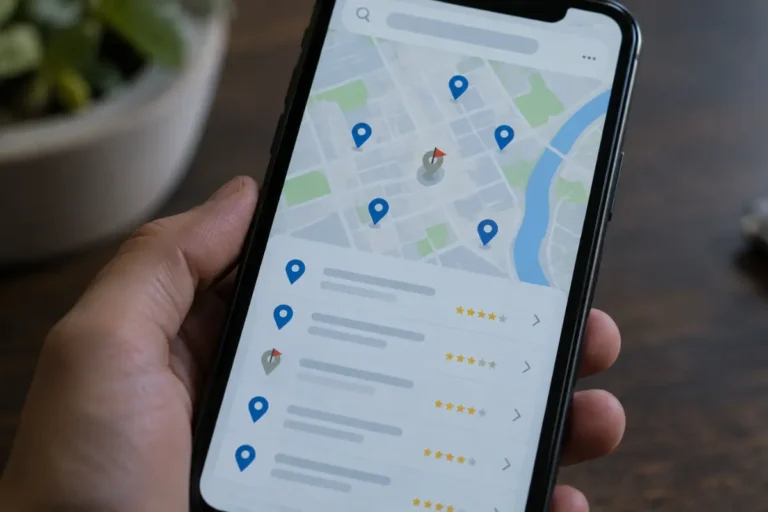
Homeowners searching for “garage door repair near me” typically contact one of the top three businesses in the map pack and rarely look beyond these options. If your business is not listed there, you are not losing leads; you are not being considered.
Local SEO for garage door companies involves optimizing your Google Business Profile, website, citations, and reviews to ensure your business appears when homeowners search for repair, installation, or emergency services. In this industry, your Google Business Profile typically impacts rankings more than your website. As a result, Maps optimization is central to local SEO.
Table of Contents
What Local SEO Covers (and How It Differs From Traditional SEO)
Traditional SEO focuses on broad organic rankings. In contrast, local SEO targets the Google Maps 3-pack, local organic results, and your Google Business Profile. A garage door company can achieve strong local rankings with a modest website if its profile, citations, and reviews are robust. This is uncommon in traditional SEO, where site authority is typically the primary factor.
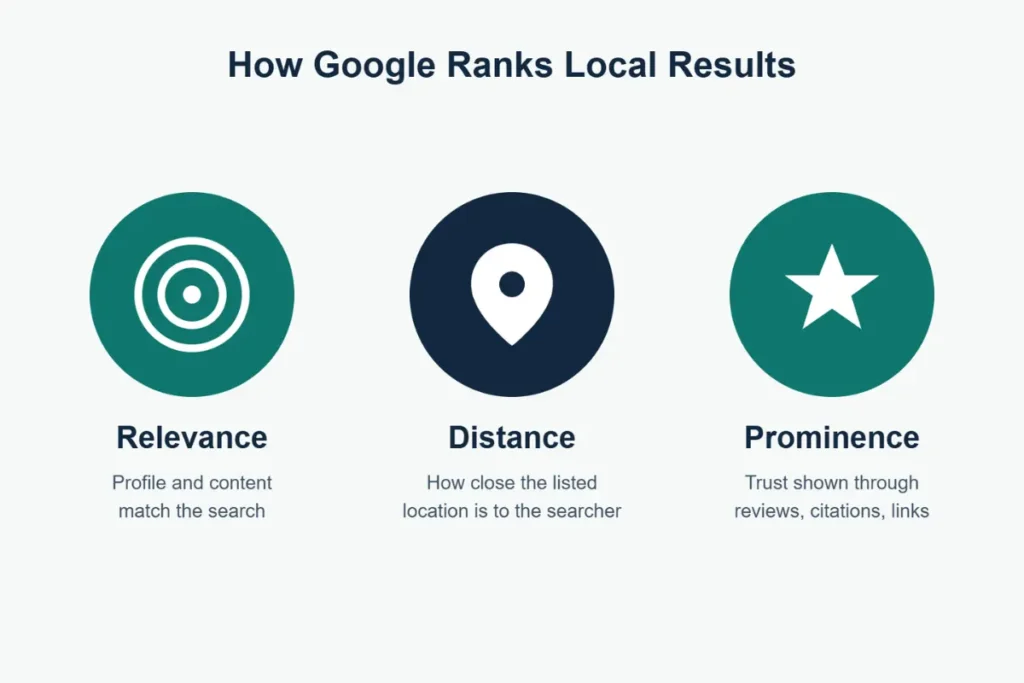
Google ranks local results on three factors:
- Relevance – how well your profile and content match the search (a page listing “spring repair” beats one that only says “garage door services”)
- Distance – how close your listed location or service area is to the searcher
- Prominence – how trusted and well-reviewed your business is, shown through reviews, citations, and backlinks
While you cannot fully control distance, service area settings and city-specific pages help Google determine your relevance to a city, even if you are located just outside its border.
Choosing Your Google Business Profile Setup
| Listing Type | Best For | Trade-off |
|---|---|---|
| Physical-address listing | A showroom, warehouse, or staffed office | Strongest ranking signal, but requires a real, staffed location |
| Service-area business (SAB) | Truck-based or multi-city operations | Hides your address, but generally ranks with less authority |
In competitive markets, securing a legitimate office lease in your target city can determine whether you appear in the map pack or achieve a top-three ranking. Do not use false locations to represent areas you do not serve. Google has increased enforcement against duplicate and fake listings, which can quickly lead to suspension. These practices also create risks beyond your own business. If you are losing calls to competitors using such tactics, refer to our guide on garage door map pack spam.
Building a Fully Optimized Profile
Your Google Business Profile typically has a greater impact on map pack rankings than your website. Each field you complete serves as a ranking signal.
Category: Select either “Garage Door Repair Service” or “Garage Door Supplier” as your primary category, depending on which service generates most of your revenue. Add two to five closely related secondary categories. Avoid unrelated categories, as they reduce relevance.
Services menu: List each distinct service you offer, such as spring replacement, cable repair, opener installation or repair by brand, panel replacement, new installations, and emergency or same-day service. Avoid using only broad terms like “Repair” and “Installation.” Each specific service acts as keyword-indexed content that Google can match to relevant searches.
Description: 750 characters allowed, but only the first 250 show before “more.” Lead with service area and specialty, save credentials for later.
Photos: Upload 10 to 15 photos initially, and add several new photos each month. Include images of installations, technicians at work, company vehicles, and before-and-after shots. Google displays different photos based on the search term, so a broad selection works better than a small, curated set.
Hours and messaging: Clearly state 24/7 availability if applicable, and enable messaging. If you leave hours at the default setting or turn off messaging, you may lose potential leads without Google notifying you.
| Field | What “optimized” looks like |
|---|---|
| Primary category | Matches majority-revenue service exactly |
| Secondary categories | 2-5 closely related, no dilution |
| Description | Key differentiators in first 250 characters |
| Services menu | Every distinct service listed |
| Hours | Accurate, 24/7 marked if true |
| Photos | 10+ to start, added monthly |
| Reviews | Actively requested, answered within 48 hours |
| Posts | Weekly |
Local Keyword Research, Briefly
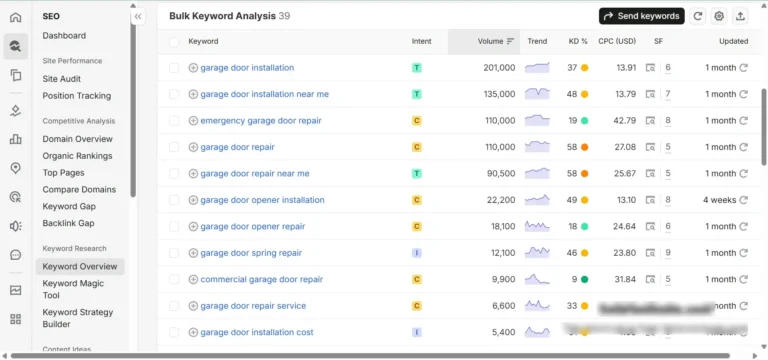
Align search intent with specific pages instead of focusing solely on keyword volume. Use “service + city” patterns (such as garage door repair Austin) on dedicated location and service pages. Emergency terms (like garage door repair near me or 24-hour repair) require fast-loading pages with the phone number prominently displayed. Separate repair and installation content, as repair customers prioritize speed and pricing, while installation customers seek photos and financing information. For a comprehensive list, refer to the garage door keywords guide, which categorizes over 220 terms.
Citations, NAP, and Local Backlinks
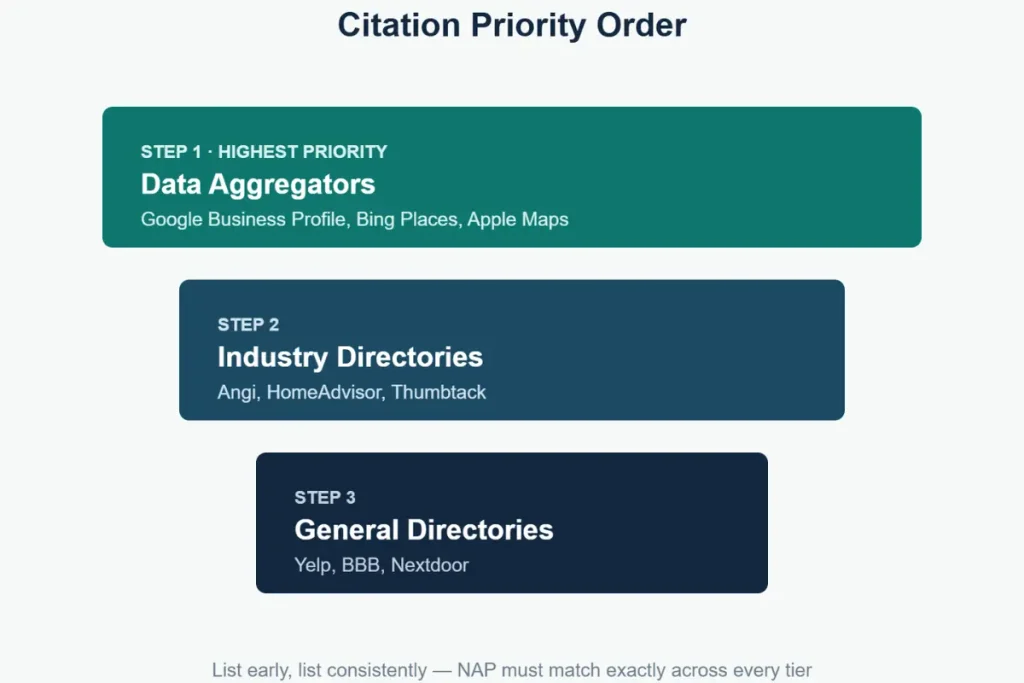
Ensure your name, address, and phone number are consistent across all documents, including details such as “St.” versus “Street.” The recommended priority order for citations is as follows:
- Data aggregators (Google Business Profile, Bing Places, Apple Maps)
- Industry directories (Angi, HomeAdvisor, Thumbtack)
- General directories (Yelp, BBB, Nextdoor)
Structured data, or schema markup, clearly communicates your business details to Google and AI platforms. At a minimum, use LocalBusiness schema for your name, address, and service area, and Service schema for each offering, such as spring repair or opener installation. For a complete schema breakdown, including FAQ and review markup, refer to our guide to AI SEO for garage door companies.
Citations verify your business’s existence, while backlinks from credible sources enhance your map pack visibility. Focus on manufacturer or dealer directories, chamber of commerce listings, partnerships with realtors or property managers, and local sponsorships. Avoid paid link networks and bulk directory submissions. A few authentic local links are more valuable than many low-quality ones.
Reviews and Staying Active
Recent reviews are as important as total volume. Forty reviews from the past six months are more effective than 200 older ones for both Google and homeowners. Send automated review requests immediately after each job, and follow up once if you don’t get a response. Do not offer incentives, as this violates policy. Respond to every review within 48 hours.
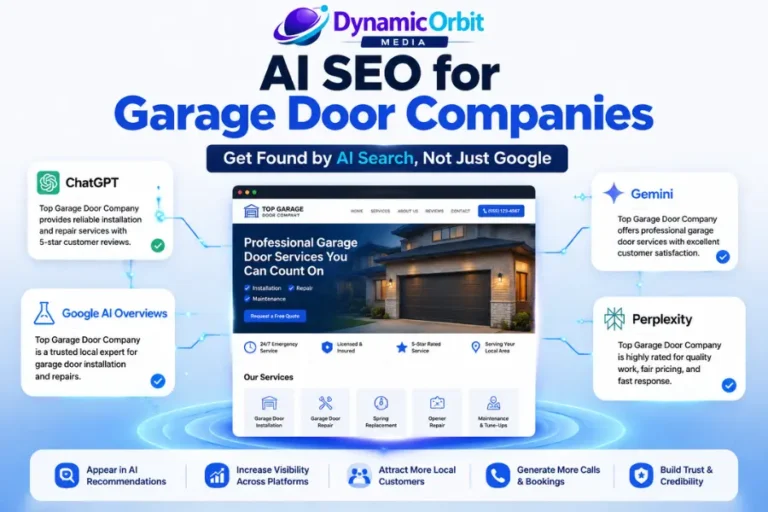
Google has replaced the manual Q&A feature with an AI-generated “Ask about this place” tool, which uses information from your profile, reviews, and website content. Keep your services menu, description, and FAQ content specific and up to date, since the AI relies on these sources for answers. The same principles apply to ChatGPT, Perplexity, and Gemini when homeowners use those platforms.
Location Pages
Create a unique page for each city you serve, rather than a generic service areas page. Ensure each page includes the city name in the title, references to local landmarks or neighborhoods, city-specific reviews if available, and a clear call to action. Avoid duplicating pages and changing only the city name, as Google considers this thin content, which can negatively impact all affected pages.
Winning Emergency Searches
When facing an urgent issue, such as a door stuck open at night, homeowners typically contact the first credible provider who responds, rather than the one with the most appealing website. To capture these opportunities, make sure your emergency pages load quickly, display your phone number prominently, and don’t require forms before a call. Please verify that your GBP hours accurately reflect after-hours availability, as Google may exclude your business from emergency searches if your listed hours indicate you are closed.
Organic Map Pack vs. Paid Local Services Ads
| Organic Map Pack | Local Services Ads | |
|---|---|---|
| Cost | No cost per click | Pay-per-lead |
| Requirements | GBP, reviews, citations | Background check, license verification |
| Placement | 3-pack | Above ads and organic |
| Time to results | Weeks to months | Near-immediate after approval |
Most companies use both approaches. LSAs address immediate gaps and speed market entry, while organic strategies build lasting visibility that continues without ongoing costs. For more details on integrating these methods with paid ads and content, see our comprehensive garage door lead generation guide.
When Something Goes Wrong
Garage door listings are suspended more often than listings in most other trades, often because of address mismatches, incorrect categories, duplicate listings, or sudden increases in reviews. Suppressed listings remain visible but rank lower, while suspended listings are removed entirely. Before concluding that a listing is suspended, check for competitor changes or area-wide algorithm updates. For a complete list of causes and reinstatement steps, refer to why garage door Google Business Profiles get suspended.
Common Mistakes
- Incomplete profile fields or inconsistent NAP data
- Not responding to reviews, or not requesting them
- Duplicate location pages with only the city name changed
- Expanding into new cities faster than your citations and content can support
Measuring Results
Avoid checking rankings from your own device, as Google personalizes results based on location. Instead, monitor rankings across a weekly grid covering your service area. Track Google Business Profile engagement metrics, such as calls, clicks, and direction requests, alongside rankings. If rankings increase but engagement does not, the issue is typically with the profile content rather than the ranking itself. Use dedicated call-tracking numbers, and make sure they aren’t included in your citations or schema, to accurately link rankings to booked jobs instead of just clicks.
Want More Local Leads From Google?
Dynamic Orbit Media develops local SEO and Google Business Profile strategies tailored to the search behaviors of garage door customers. If you prefer a managed solution, please review our comprehensive garage door SEO services.