Local Link Building for Locksmiths: 15 Backlink Strategies That Actually Work
If you operate a locksmith business, you likely know that backlinks are important for SEO. However, locksmiths are in one of Google’s most closely monitored local categories, so the way you earn links is just as important as the number you obtain.
This guide to local link building for locksmiths is for owners and marketers familiar with local SEO who want a practical, prioritized approach to building local backlinks while minimizing the risk of Google Business Profile suspension. It includes a risk framework, 15 specific tactics, guidance on expected volume and budget, and a checklist for evaluating link-building vendors if you choose to outsource.
Table of Contents
Why Link Building Is Different for Locksmiths
Locksmiths, as well as garage door repair, plumbing, and towing companies, are considered by Google to be “sensitive” or high-risk local businesses. Due to a history of fake storefronts, virtual office listings, and call-center lead brokers, Google now scrutinizes this industry more closely than others. This increased scrutiny goes beyond your Google Business Profile and includes the broader trust signals search engines use to assess your site, such as your backlink profile.
In practice, this has two implications. First, authentic local links from legitimate chambers of commerce, news outlets, and trade associations are especially valuable for locksmiths, as they serve as strong legitimacy signals that are difficult to falsify. Second, shortcuts such as paid link networks, bulk directory submissions, and reciprocal link schemes pose greater risks for locksmiths, since Google already associates these tactics with the types of fraud it targets in this industry.
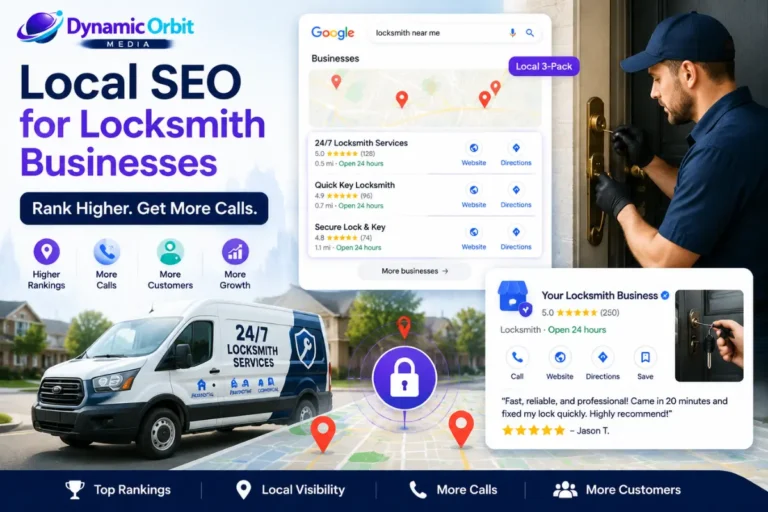
For a comprehensive overview of how Google evaluates locksmith businesses locally, including categories, service areas, verification, and Map Pack ranking factors, see our complete guide to local SEO for locksmith businesses.
Is It Safe to Build Links as a Locksmith?
The safest local link-building tactics for locksmiths involve real, verifiable connections such as directory listings, sponsorships, press mentions, or genuine partnerships. In contrast, paid link networks and bulk reciprocal-link schemes pose significant risks, especially in a category that Google closely monitors for fraud.
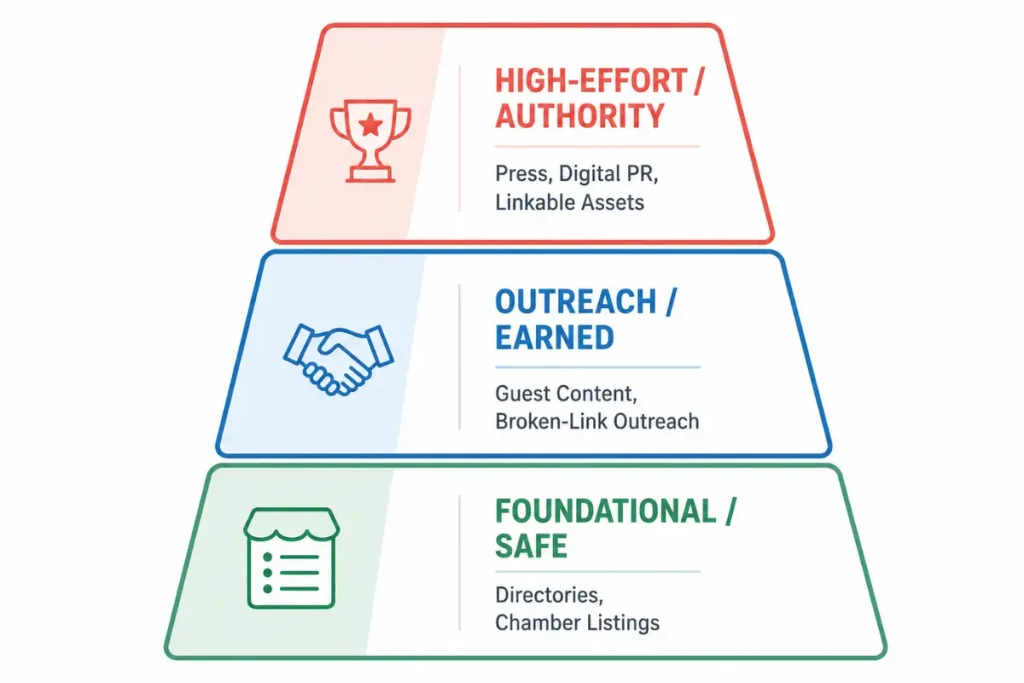
Not all link-building tactics carry the same level of risk. It is helpful to consider local link building in three distinct tiers:
Foundational/Safe tier: Directory and citation-adjacent listings, trade association memberships, and Chamber of Commerce profiles. These links originate from legitimate, verifiable organizations, are easy to obtain, and serve as trust signals beyond their SEO benefits.
Outreach/Earned tier: Guest content, broken-link outreach, link insertion, and partnership cross-promotion. These methods require authentic relationship-building or valuable content, making them more impactful because they are difficult to replicate at scale.
High-Effort/Authority tier: Local press coverage, digital PR, and original linkable assets such as tools, guides, or data that other sites reference. These require the most effort to obtain but result in the strongest and most durable links, as they are based on independent editorial decisions.
Avoid purchased links from link farms or private blog networks (PBNs), bulk directory submission services that place your business on low-quality or irrelevant sites, and reciprocal link schemes with unrelated businesses. These tactics do not reflect genuine connections and, in a category already flagged for fraud, offer minimal short-term benefits while exposing your business to significant suspension risk.
15 Local Link-Building Strategies for Locksmiths
Follow these strategies in order. The initial tactics require less effort and are safer, providing a foundation that makes advanced, higher-authority tactics more accessible.
- Claim your Chamber of Commerce listing. Most local chambers provide a member directory that links to your website. This offers a reliable, low-effort connection from a trusted local organization.
- Ensure your business is accurately listed on key directories such as Yelp, Angi, BBB, Bing Places, and Apple Business Connect. These platforms provide valuable citations and backlinks, while consistent information across them strengthens the NAP signals Google uses to verify your Google Business Profile.
- Obtain listings in ALOA or state licensing board directories. If you or your state licenses locksmiths are an Associated Locksmiths of America member, these directories serve as reliable trust signals. Most lead-generation brokers and fake storefronts cannot provide a valid license number or ALOA membership.
- Pitch seasonal or safety-focused stories to local news outlets. Reporters often cover practical safety topics such as winter lockout trends, holiday break-in prevention, and storm-related security tips. Earning a quote or feature from a local news site provides a valuable link for locksmiths, as it reflects independent editorial judgment rather than paid promotion.
- Contribute guest articles to real estate or home-improvement blogs. For example, a well-crafted post on securing a new home after move-in for a local real estate agency’s blog provides a relevant, contextual link and increases your visibility among new homeowners.
- Consider sponsoring a local youth sports team, school event, or community fundraiser. Sponsorship pages typically include a link to sponsors’ websites, providing a direct way to build local goodwill and secure a valuable backlink.
- Partner with real estate agents and property managers. These professionals often require reliable locksmiths for lockouts, rekeys, and move-in security. Many also maintain a “trusted vendors” or “preferred partners” page that can feature your services.
- Consider cross-promotion with hardware stores and related trades. Security companies, hardware stores, and auto repair shops share a similar customer base but do not compete directly. Initiatives such as co-branded checklists, joint workshops, or mutual referral pages can help establish effective partnerships.
- Conduct broken-link outreach on relevant home-security resource pages. Use available tools to identify dead links on home safety or security tip pages. When you find one, send a concise, helpful email recommending your page as a replacement. This approach is a legitimate and cost-effective way to earn backlinks.
- Consider link insertion in relevant, already-published articles. Unlike broken-link outreach, this approach offers additional context or a valuable resource to enhance existing content. It is most effective when you can provide genuinely useful information rather than simply requesting your link be added.
- Create a genuinely useful linkable asset. For example, a home-security checklist, a one-page guide for what to do if you’re locked out, or a plain-language overview of rekeying costs provides other sites with a real reason to link to you, rather than simply requesting a link.
- Review competitor backlink profiles to identify practical link-building opportunities. Tools such as Ahrefs or SEMrush can show which sites link to other locksmiths in your market. If a local directory or publication links to several competitors, consider targeting it as well.
- Consider sponsoring or participating in a school safety fair or community workshop. In addition to sponsorship, providing a brief, complimentary “lock safety” talk or demonstration at a community event can often result in recognition and a website link from the organizing group.
- Establish formal referral relationships with apartment complexes and property managers. Instead of a single backlink, this approach can provide a continuous source of links and job opportunities, as many multi-unit properties regularly update their vendor pages.
- Propose a seasonal digital PR angle instead of a generic press release. For example, highlight a spike in lockouts during a cold snap, an increase in local break-ins, or offer practical advice related to current news. Timely and specific pitches are much more likely to be picked up than generic announcements.
How Many Local Links Do You Actually Need?
There is no set number. A few relevant, local, and verifiable links from directories, associations, or local press are more effective than many generic or unrelated links. For this type of business, Google prioritizes local relevance over link quantity.
For most single-location or small multi-location locksmiths, an initial goal should be to secure listings in core directories and citation sources (Chamber of Commerce, Yelp, Angi, BBB, Bing Places) and earn two or three quality links, such as a press mention, trade association listing, or a strong partnership link, within the first 90 days. After that, aim for steady, organic growth by adding a few relevant links each quarter. Rapidly acquiring many links in a short period may trigger Google’s spam detection, especially in high-risk categories like locksmith services.
Budgeting for Locksmith Link Building
Link-building costs depend on market size and whether you manage the work in-house or outsource it. Consider the following general guidelines:
| Tier | Monthly Focus | What It Typically Includes |
|---|---|---|
| Starter | Foundational directories and citations | Chamber of Commerce, core directories, ALOA/licensing board listing, basic NAP consistency |
| Growth | Outreach and partnerships | Guest content placement, partnership development with real estate/property managers, broken-link and link-insertion outreach |
| Established | Authority and PR | Digital PR pitching, original linkable asset development, ongoing press relationship building |
Costs at each tier vary based on your market’s competitiveness and whether you handle outreach yourself or outsource it. Use these as effort tiers for planning, not as fixed price points.
How to Vet a Link-Building Vendor (Without Getting Burned)
If you are considering outsourcing link building, ask these questions to distinguish reputable providers from those that may pose risks:
- Ask specifically where the links will originate. A reputable vendor should clearly identify the sources, such as directories, guest posts, partnerships, or press, rather than only promising “high-authority backlinks.”
- Exercise caution with providers who promise specific link counts or guaranteed rankings. No reputable SEO provider can assure a set number of links or ranking results.
- Confirm whether paid placements will be disclosed. While guest-post and sponsored-content arrangements can be legitimate, they must be transparent and not concealed by unclear language.
- Ensure that links are both locally and topically relevant. Links from unrelated industries or regions do not provide the trust signals needed to improve a locksmith’s ranking.
- Ensure you maintain ownership and full visibility into the work. You should have access to a detailed record of all links built on your behalf, rather than only receiving a monthly summary.
We hold ourselves to the same standard. If you prefer, Dynamic Orbit Media can manage this for you. Our local SEO services for locksmiths include local link building within a comprehensive, transparent strategy, rather than offering unclear link packages.
How Link Building Fits Into Your Broader Locksmith SEO Strategy
Link building is just one part of a comprehensive local SEO strategy and should not replace other essential elements. It works together with a fully optimized Google Business Profile, consistent NAP citations, authentic customer reviews, and well-targeted service and location pages. For a complete approach, including site structure, schema markup, and a 90-day rollout plan, refer to our full guide to local SEO for locksmith businesses. If you are still determining which keywords to target in your content and service pages, our guide to SEO keywords for locksmiths is a helpful next step.